Aluminum blinds

Fine lines. Precise adjustment.

Aluminum blinds use slim horizontal slats for compact stacking and fine-grained control. Their crisp materiality is at home in workspaces, modern interiors, and practical repeated applications.

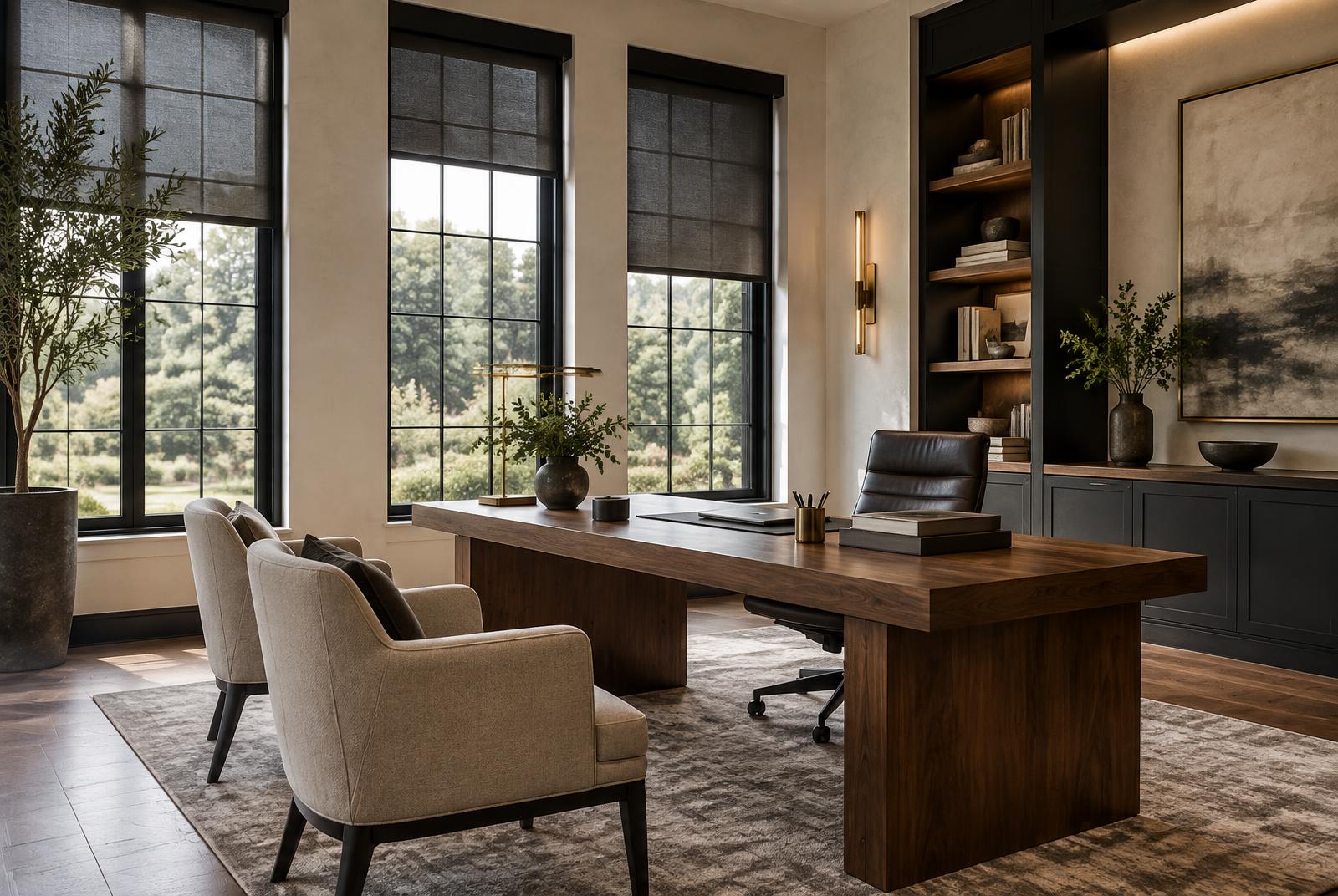
Crisp dark window treatments in a modern Delaware workspace

The essential details

How it looks, works, and lives.

01

Design character

Matte, metallic, and neutral finishes can echo frames, hardware, and modern detailing without adding visual weight.
02

Light and privacy

Tilt redirects daylight and closes sightlines. Perforated and specialty finishes alter light behavior but do not create blackout.

03

Comfort and care

Slats can be dusted or carefully wiped. Bent slats show, so active zones need sensible placement and operation.

A strong fit

Consider this when…

  • Offices and workspaces
  • Compact mounting conditions
  • Crisp modern or utilitarian rooms

Look again

Another answer may be better when…

  • Soft residential schemes seeking textile warmth
  • True blackout
  • High-contact openings where slats may be bent

Specification notes

Details that change the result.

Gauge

Slat construction and width influence durability and visual refinement.

Finish

Low-sheen finishes often manage reflections more quietly than bright metallic surfaces.

Commercial use

Repeatable sizing and neutral palettes can support consistent workplace specifications.

For commercial projects

Specifying this for an office, school, healthcare, or hospitality project? Commercial blinds

Frequently asked

A few useful answers.

Do aluminum blinds work in offices?+

Yes. Their precise adjustment and compact profile suit many work and meeting spaces.

Are aluminum blinds blackout?+

No. Slats darken and redirect light, but gaps remain.

How are bent slats avoided?+

Use careful operation and consider whether an active door or low window needs a more resilient solution.

Private, in-person guidance

See the material in your own light.

Request a consultation