Room-darkening & blackout

Darkness is a system, not just a fabric.

Blackout shades use opaque material to stop light through the fabric. The final room-darkening result also depends on how the shade overlaps the opening and manages edge light.

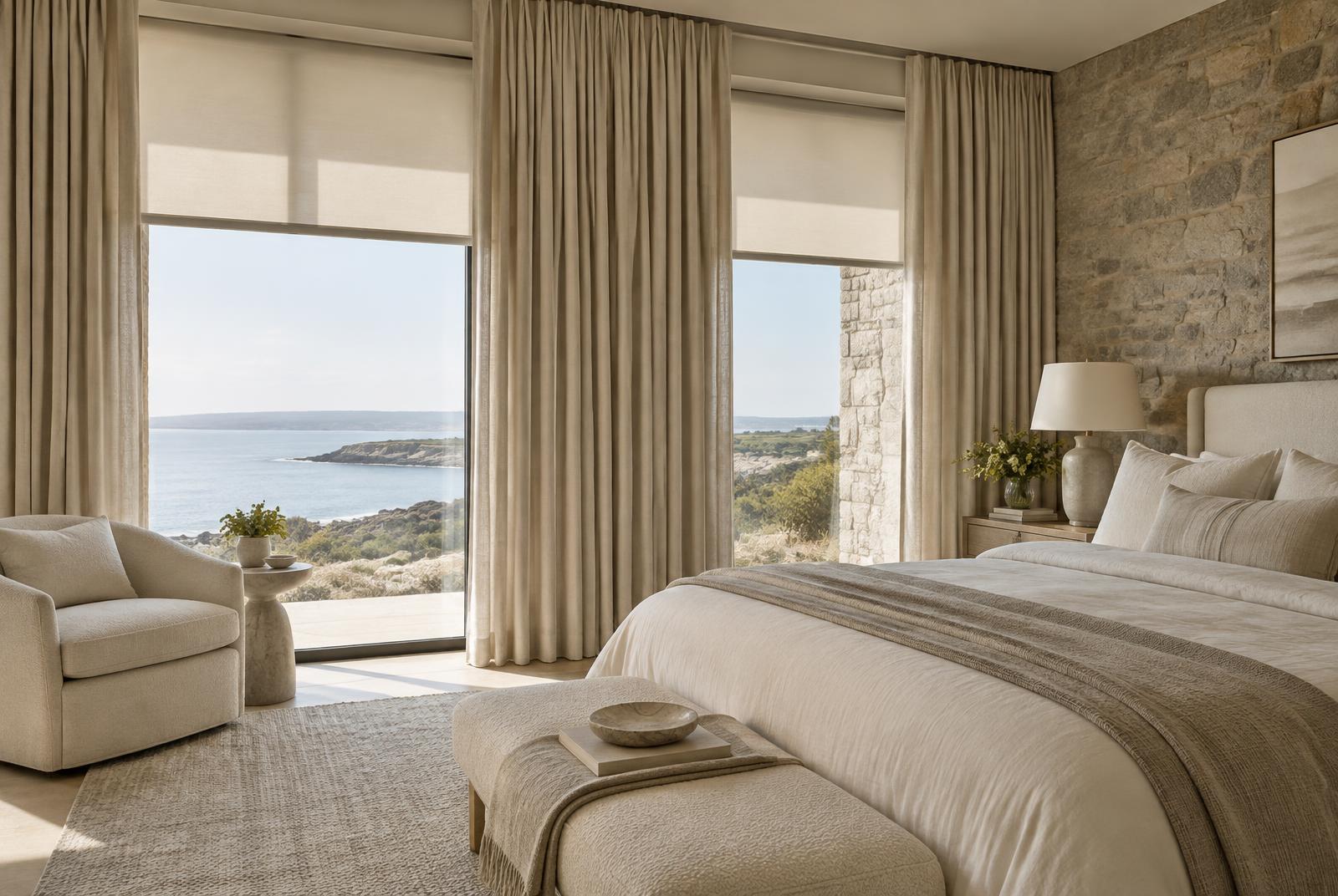
Layered blackout shades in a calm coastal bedroom

The essential details

How it looks, works, and lives.

01

Design character

Blackout can be discreet: a simple roller, a lined Roman shade, or a layered treatment that adds softness while concealing performance details.
02

Privacy and light

An opaque lowered shade provides strong privacy and room-darkening. Side channels, deeper overlap, or layered drapery improve darkness where sleep or presentation is critical.

03

Comfort and care

Opaque treatments can reduce direct exposure when closed. Care depends on fabric; mechanisms and channels should remain free of debris.

A strong fit

Consider this when…

  • Bedrooms and nurseries
  • Media and presentation rooms
  • Hospitality and shift-sleep spaces

Look again

Another answer may be better when…

  • Maintaining an outward view while lowered
  • Rooms where some edge glow is unacceptable but channels are not feasible
  • Windows requiring frequent ventilation without coordination

Specification notes

Details that change the result.

Edge light

Inside-mounted shades usually leave a perimeter glow; outside mounts or channels can improve coverage.

Layers

Drapery can soften the architecture and help manage side light without making the shade visually heavy.

Automation

Scheduled closing supports bedtime routines and hard-to-reach bedroom glass.

For commercial projects

Specifying this for an office, school, healthcare, or hospitality project? Commercial blackout shades

From the journal

Read the decision in more depth.

Product Comparisons · 6 min

Blackout Shades vs Room-Darkening Shades

Blackout describes material. Room-darkening describes what the installed room actually feels like.Read the guide

Room & Window Type · 7 min

Best Window Treatments for Bedrooms

A bedroom treatment should answer three moments: waking daylight, evening privacy, and the darkness needed for sleep.Read the guide

Frequently asked

A few useful answers.

Is blackout the same as room-darkening?+

Not always. Blackout describes opaque material; room-darkening describes the combined installed result, including edge light.

Will an inside-mounted blackout shade make a room completely dark?+

It often leaves light around the perimeter. Greater overlap or channels may be needed for a more complete result.

Can blackout shades be motorized?+

Yes, and automation can be useful for routines, groups, and difficult-to-reach windows.

Private, in-person guidance

See the material in your own light.

Request a consultation