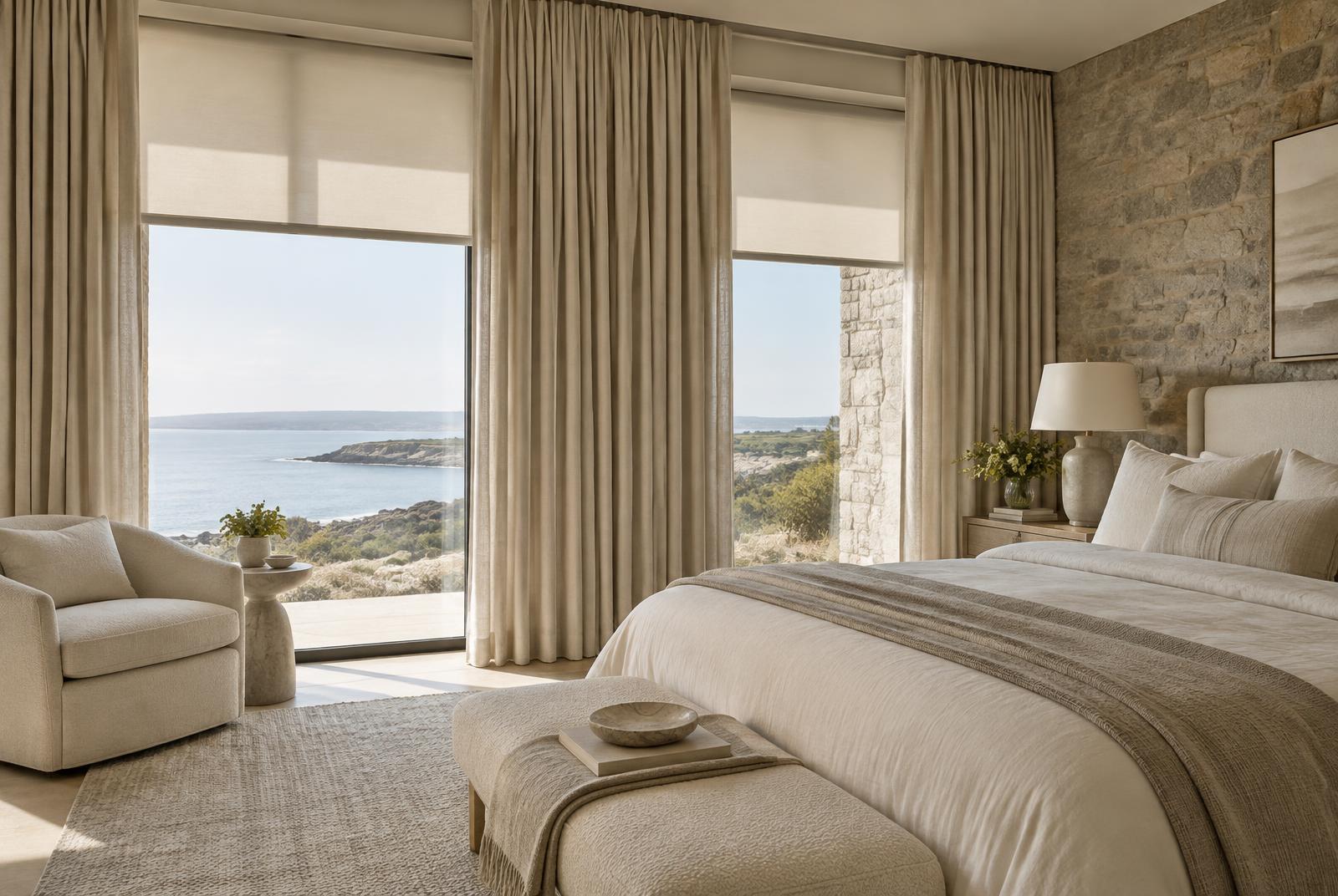
01
Define the sleep target
Some sleepers only need reduced dawn light; others need stronger darkness because of shift work, nurseries, migraines, or outside lighting. The required result determines whether an ordinary opaque shade, larger overlap, layered drapery, or side channels make sense.
02
Protect privacy after dark
Interior lighting reverses the day’s brightness relationship. Open-weave solar and sheer materials can expose silhouettes or views. Use an opaque privacy layer when the room is occupied at night.
03
Plan the morning
Top-down shades can bring sky light above eye level. Motorized scenes can open gradually or coordinate several windows, but controls should remain intuitive beside the bed.
04
Make performance feel residential
A tailored Roman, woven shade with lining, or drapery layer can soften a technical blackout solution. Verify stack, radiator or furniture clearance, ventilation, and child-safe operation.
Decision table
Compare the practical tradeoffs.
| Need | Starting point | Detail that matters |
|---|---|---|
| Everyday privacy | Opaque roller or cellular shade | Fabric opacity and edge gaps |
| Strong darkness | Blackout shade with overlap or channels | Perimeter light |
| Soft design | Lined Roman or woven shade | Lining and fold |
| Routine | Motorized grouped shades | Simple bedside control |
Choose the darkness target first, then build the bedroom aesthetic around the required coverage.