Woven shades

Natural texture, edited for the coast.

Woven shades use grasses, reeds, wood, and textile fibers to bring depth and irregular beauty to the window. The weave and lining determine how decorative becomes functional.

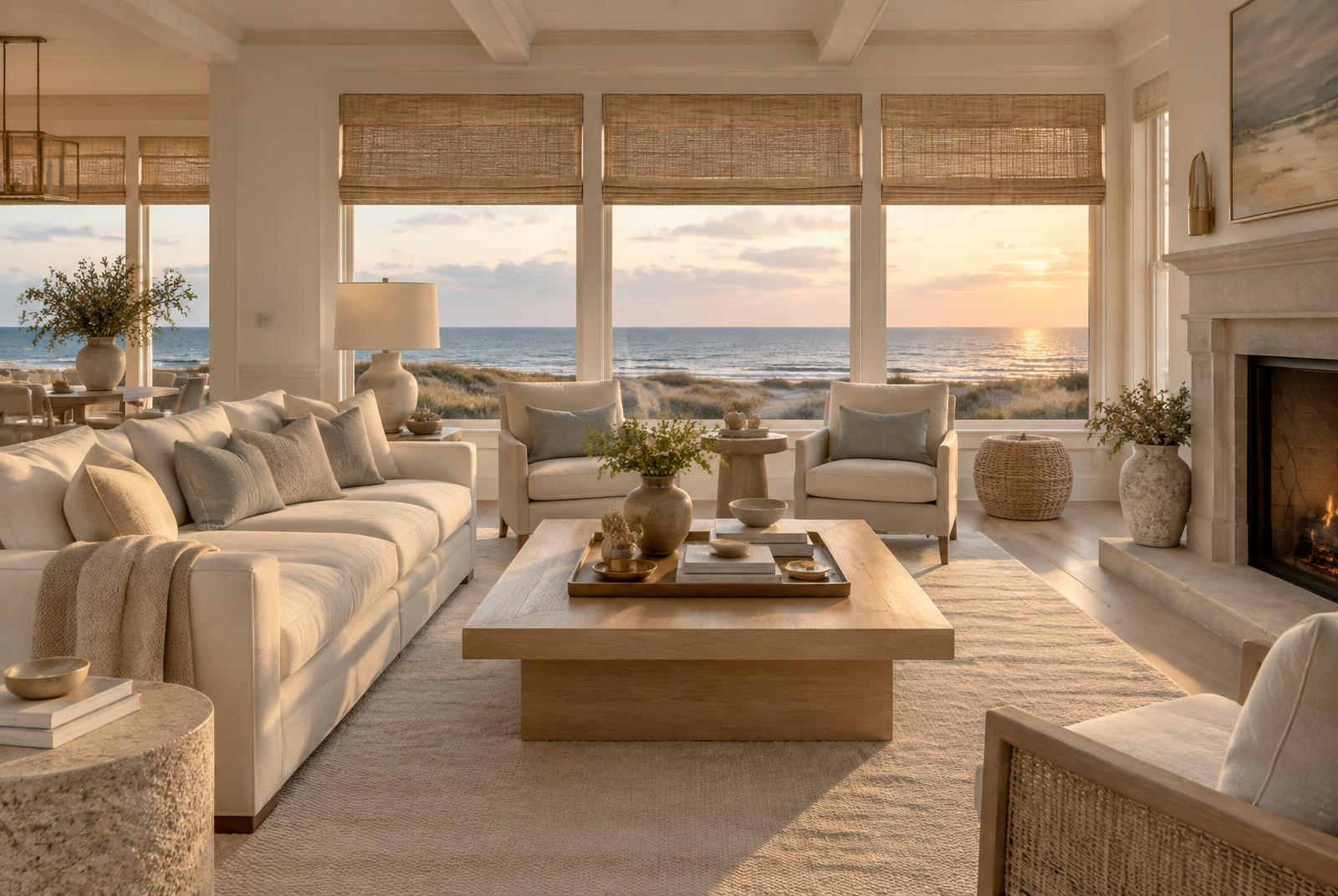
Natural woven shades overlooking the Delaware coast

The essential details

How it looks, works, and lives.

01

Design character

Variations are part of the material language. Wovens bridge relaxed coastal architecture, layered traditional rooms, and warm modern interiors.
02

Light and privacy

An unlined open weave filters light but may not provide privacy. Privacy and blackout linings make the treatment more opaque.

03

Comfort and care

Lining can reduce direct exposure through the weave. Natural materials should be dusted gently and protected from repeated moisture or abrasion.

A strong fit

Consider this when…

  • Coastal and organic interiors
  • Rooms needing visual warmth
  • Layering with drapery or simple architecture

Look again

Another answer may be better when…

  • Wet locations without a suitable material
  • Perfect uniformity in color and weave
  • Blackout without a purposeful lining and mount

Specification notes

Details that change the result.

Variation

Natural fibers shift in tone and texture; samples should be viewed as a family, not a printed guarantee.

Lining

Choose unlined, privacy, or blackout based on view, street exposure, and room use.

Operation

Motorization can make large woven treatments easier to handle consistently.

Frequently asked

A few useful answers.

Are woven shades private?+

Only some weaves are private by themselves. A privacy or blackout liner is often needed after dark.

Do woven shades vary in appearance?+

Yes. Natural fibers have expected shifts in color, thickness, and weave.

Can woven shades work in coastal homes?+

Yes, when the material, lining, exposure, and moisture conditions are considered carefully.

Private, in-person guidance

See the material in your own light.

Request a consultation