Large windows

Broad glass needs proportion, power, and restraint.

Large windows are best approached as an elevation, not a collection of unrelated rectangles. Width, fabric roll, seams, power, stack, mullions, and view should be coordinated together.

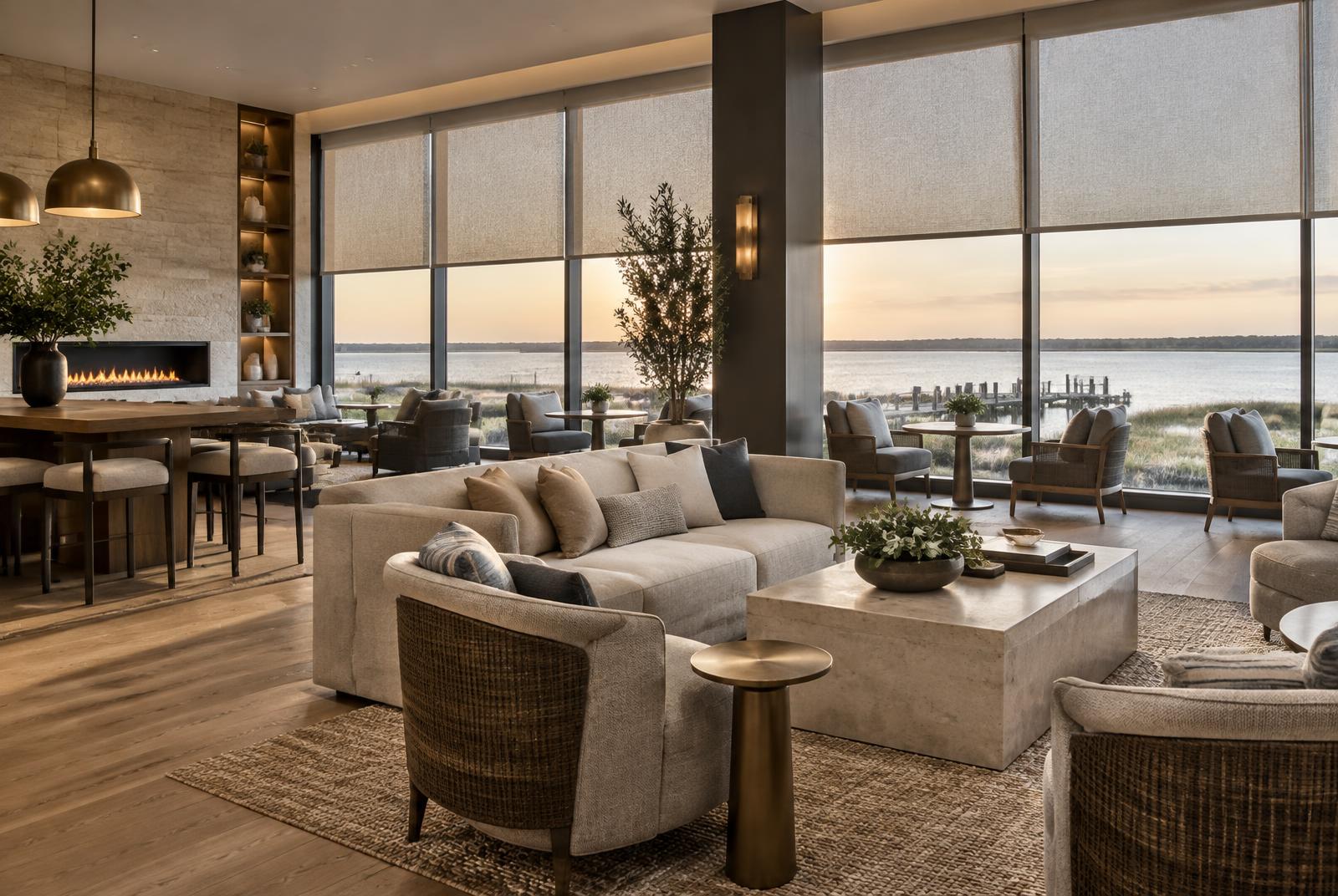
Broad waterfront windows with coordinated solar shades

The essential details

Make the decision from the goal backward.

01

Keep the view

Solar shades or film maintain connection to the exterior while reducing glare; each affects the glass differently.
02

Move the weight

Motorization makes high and wide treatments easier to operate consistently and protects fabrics from uneven handling.

03

Align the architecture

Shade divisions should follow mullions, doors, symmetry, and how the room is furnished.

A strong fit

Consider this when…

  • Waterfront glass
  • Great rooms and double-height spaces
  • Commercial and hospitality façades

Look again

Another answer may be better when…

  • Single oversized units beyond practical limits
  • Manual systems that will rarely be adjusted
  • Divisions unrelated to window geometry

Specification notes

Details that change the result.

Size

Material and hardware limits determine whether one shade or several aligned shades make sense.

Power

Plan wiring or charging access before concealing headrails.

Combination

Film plus motorized shades can preserve daily views while supporting privacy and peak-hour control.

For commercial projects

Specifying this for an office, school, healthcare, or hospitality project? Commercial shades for large openings

From the field · Real window conditions

What the glass actually looks like.

These photos are from Shore Tint & More glazing and window-film jobs, Delaware Shade Co.’s sister brand. They are not Delaware Shade Co. shade or blind installations.
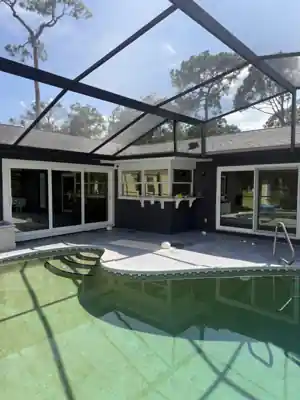
Screened pool enclosure over a swimming pool with sliding glass doors and large surrounding glass panels, from a Shore Tint & More window-film job

Indoor pool and enclosure glazing

Large enclosure glass concentrates heat and glare, and humidity limits which interior materials make sense.

On large, humid, sun-exposed glass, film often does the always-on work; any treatment must be chosen for moisture as well as light.

From the journal

Read the decision in more depth.

Motorization · 6 min

Are Motorized Shades Worth It?

Motorization earns its place when it removes friction from a task the room needs every day.Read the guide

Room & Window Type · 7 min

Best Window Treatments for Large Sliding Glass Doors

A door treatment has to move with the way people cross the opening—not merely cover the glass.Read the guide

Planning & Care · 9 min

How to Measure for Blinds and Shades — and When Professional Measurement Matters

Measuring is not only width and height. It is a record of where hardware can fit, move, clear, and remain square.Read the guide

Frequently asked

A few useful answers.

Can one shade cover a very large window?+

Sometimes, but material and hardware limits, weight, deflection, and visual alignment may favor multiple coordinated shades.

Are motorized shades worthwhile for large glass?+

They often improve consistent use and reduce manual handling on heavy, high, or grouped treatments.

Can film and shades be combined?+

Yes. Film can provide baseline solar control while shades add privacy, glare control, or darkness when needed.

Private, in-person guidance

See the material in your own light.

Request a consultation