Drapery & side panels

Softness, scale, and a better edge.

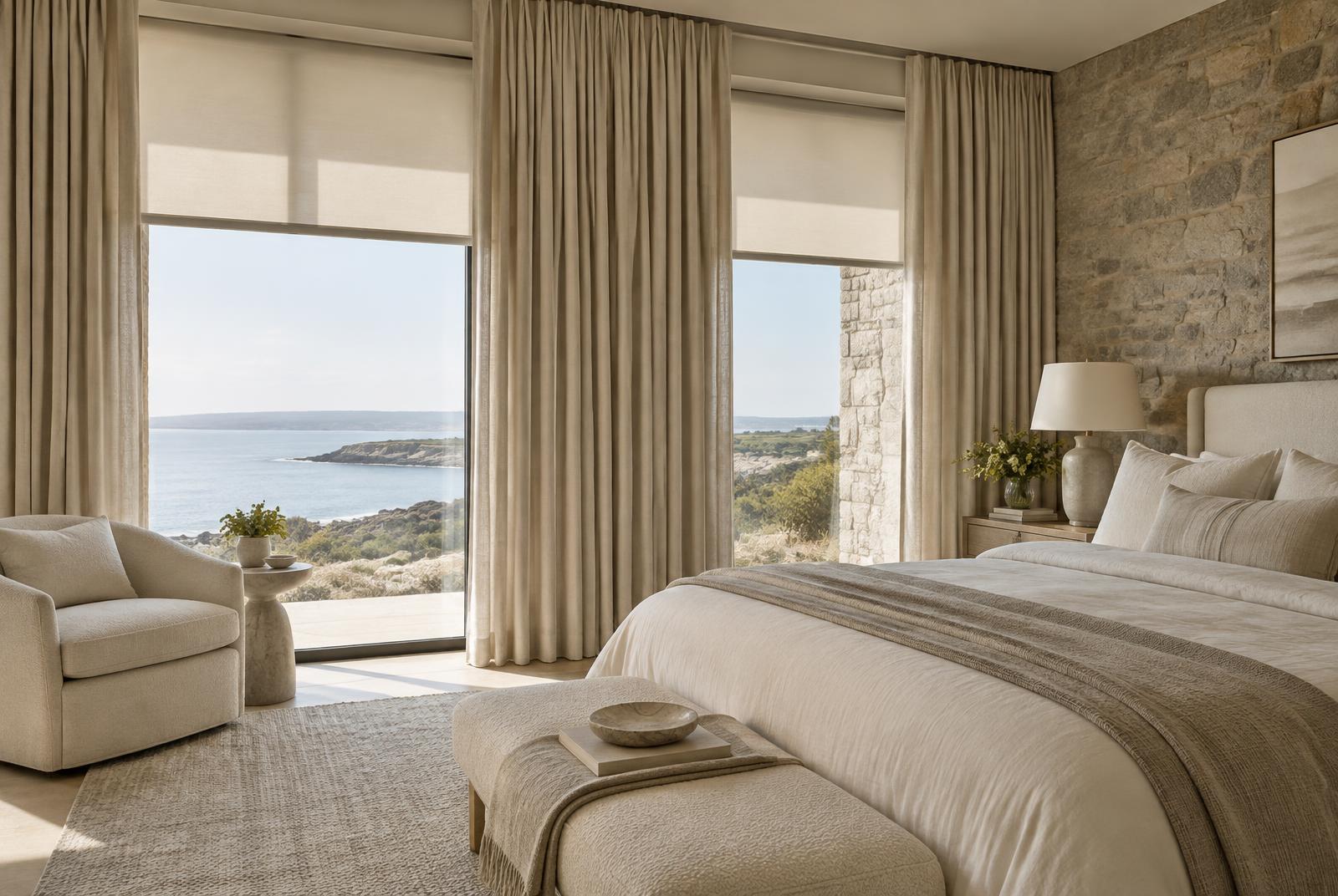
Drapery is a traversing or stationary textile panel mounted above and beside the window. It adds softness and height, and when layered with a shade it can improve privacy and reduce edge light.

Soft drapery layered over shades in a bedroom

The essential details

How it looks, works, and lives.

01

Design character

Fullness, heading style, fabric weight, and mounting height define the effect. Mounting high and wide can make windows feel larger.
02

Light and privacy

Lined or blackout-lined drapery can close the perimeter that inside-mounted shades leave open. Unlined sheers soften daylight but provide limited privacy.

03

Comfort and care

Heavier lined panels can make a room feel quieter and cozier. Care depends on the fabric; many custom panels need professional cleaning.

A strong fit

Consider this when…

  • Bedrooms needing better edge darkness
  • Living rooms wanting warmth and height
  • Layering over solar or roller shades

Look again

Another answer may be better when…

  • Tight wall space beside the window
  • Doors where stacked fabric blocks traffic
  • Rooms needing a fully minimal profile

Specification notes

Details that change the result.

Stack space

Plan where panels rest when open so they do not cover glass you want to keep clear.

Hardware

Rods, tracks, and ceiling-mounted systems change the look and the motorization options.

Layering

Assign the shade daily light control and let drapery handle softness and edge coverage.

Frequently asked

A few useful answers.

Is drapery the same as curtains?+

The terms overlap; drapery usually describes tailored, lined panels, often on traversing hardware.

Can drapery be motorized?+

Yes, on compatible tracks. Plan power and track placement early.

Will drapery make a room dark?+

Blackout-lined panels with good overlap help, especially layered over an opaque shade.

Private, in-person guidance

See the material in your own light.

Request a consultation