Screen comfort
Reduce contrast and glare at workstations without blacking out the room.
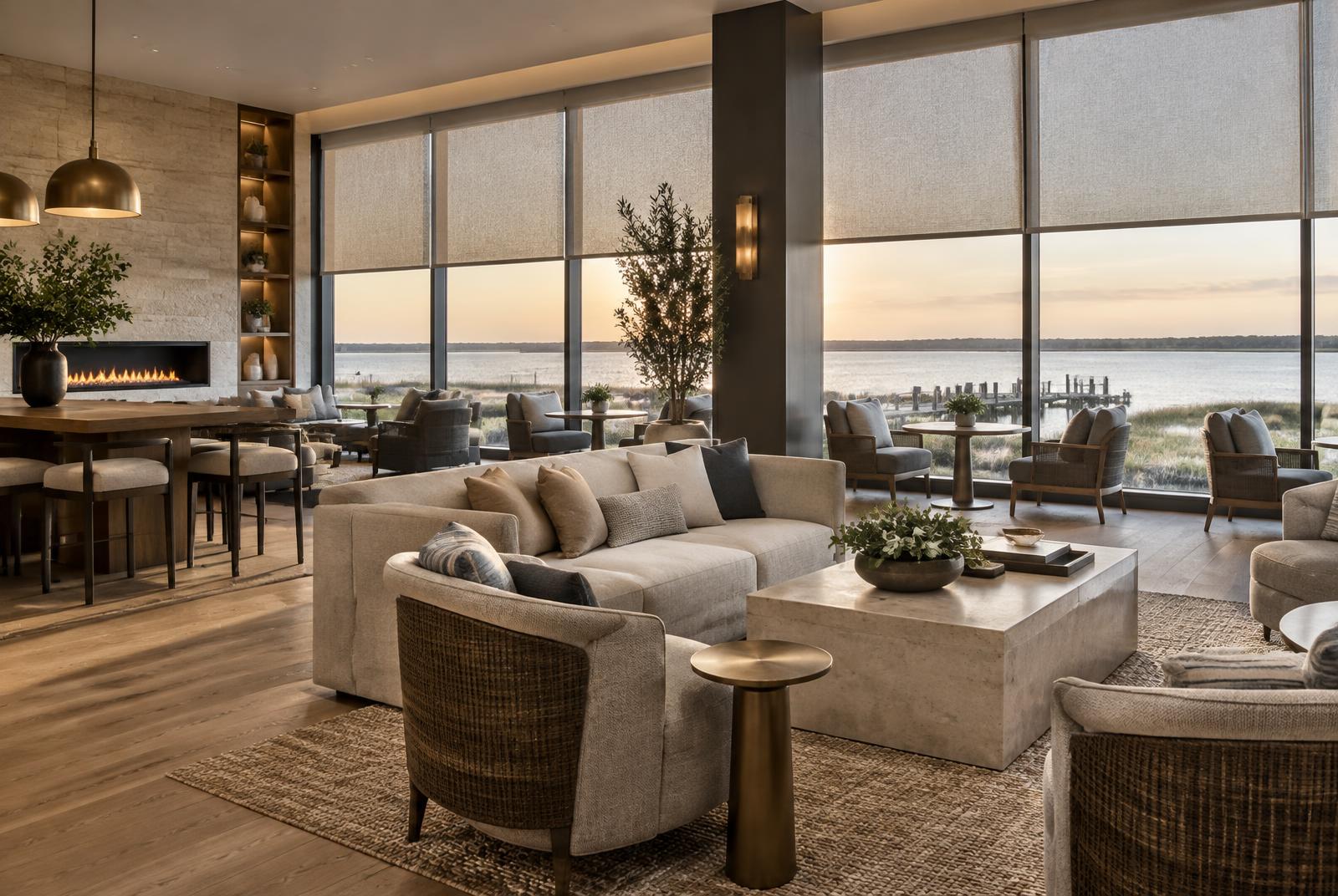
Scope
Reduce contrast and glare at workstations without blacking out the room.
Keep rooms bright and connected to the outside.
Darker fabrics generally preserve outward visibility best.
Reduce direct solar exposure near glass; outcomes vary with glass and orientation.
Solution matrix
| Space | Recommendation | Specification note |
|---|---|---|
| South/west open office | 3–5% openness, darker color | Strong glare; consider film too |
| North exposure | Higher openness | Less glare, keep more view |
| Healthcare corridors | Solar with simple controls | Cleanable fabric |
| Classrooms | Solar plus room-darkening for AV | Dual or layered |
Lower openness means more glare control and less view.
Dark interior faces reduce reflections on screens.
Pair with an opaque layer for after-hours privacy.
Related
Frequently asked
It depends on orientation, screens, and view; many glare-heavy elevations use lower openness.
Not for privacy when interiors are brighter than outside.
They can reduce solar exposure, but results depend on glass, orientation, and use; we do not promise savings.
For facilities teams, owners & project teams
Describe the building, spaces, and schedule in your request. Plan and scope review is arranged after first contact.