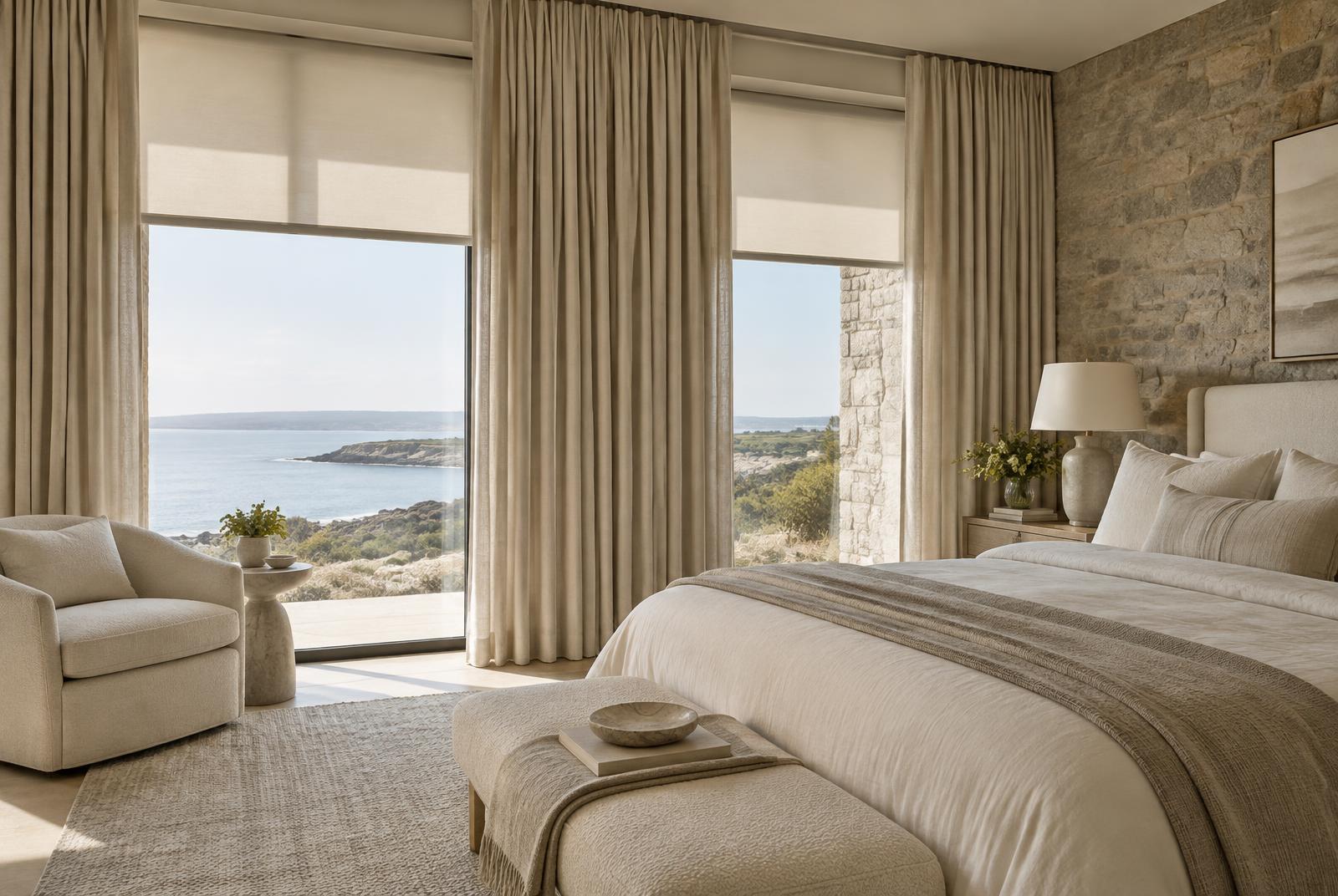
01
Give every layer one primary job
Begin with function. A solar shade can filter daytime glare, an opaque roller can close for privacy, and drapery can soften the perimeter. When two layers attempt the same task without adding control or character, the result often feels visually and mechanically excessive.
02
Build from glass toward the room
The most fitted layer usually sits closest to the glass. A shade or blind occupies the opening; drapery projects farther into the room. Confirm depth, brackets, handles, trim, and stack so layers move independently without rubbing or blocking one another.
03
Pair performance thoughtfully
Solar plus blackout shades create distinct day and night modes. Film plus a shade separates constant solar control from adjustable privacy. Shutters plus drapery combine architectural louvers with softness, provided panels can swing and fabric clears the frame.
04
Edit color, texture, and fullness
Let one layer lead. A quiet roller can sit behind expressive drapery; a woven shade can pair with restrained side panels. Related undertones and repeated hardware keep the composition calm. Fullness and mounting height should relate to the wall, not merely the glass.
Decision table
Compare the practical tradeoffs.
| Layering pair | What each layer does | Plan carefully |
|---|---|---|
| Shade + drapery | Daily control + softness/edge coverage | Projection, stack, and fabric hierarchy |
| Solar + blackout | Daytime view + evening privacy/darkness | Two rolls, fascia, and control order |
| Film + shade | Baseline solar control + adjustable coverage | Glass compatibility and shade opacity |
| Shutter + drapery | Architectural tilt + softness | Panel swing and rod projection |
Layer for two genuinely different needs, then make one layer visually dominant and the other quietly useful.