01
Map glare to the desk
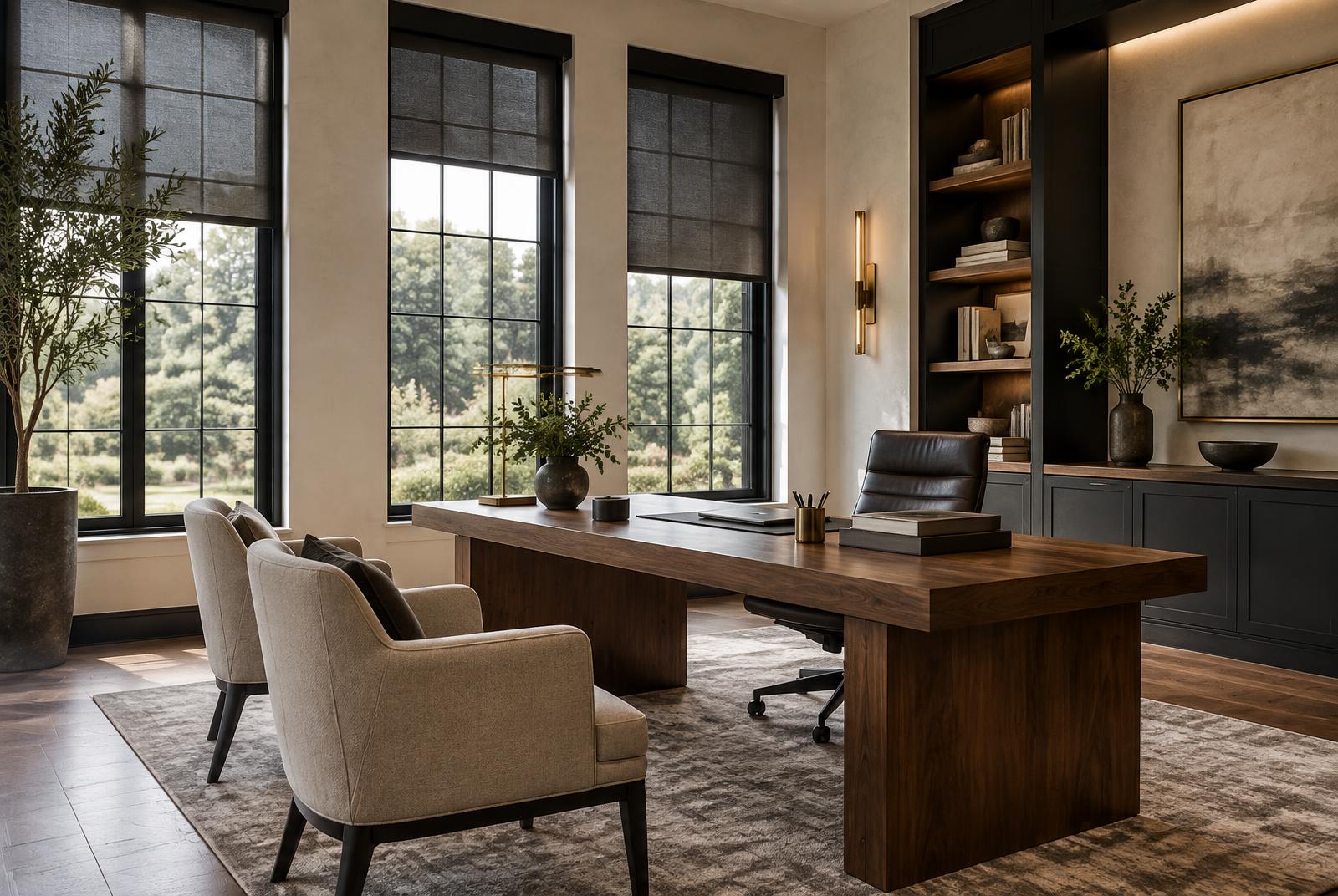
Note when direct sun or bright sky reflects on the screen. Moving the display may solve part of the problem. A solar shade filters the window field; a blind redirects light; an opaque shade provides stronger temporary control.
02
Balance the video background
A bright uncovered window behind a person can make cameras underexpose the face. Diffuse or lower the window brightness, then coordinate room lighting. Select fabric color with both the inward view and outward appearance in mind.
03
Separate view from privacy
Open solar fabrics support daytime view but do not provide dependable nighttime privacy. Add an opaque layer where evening work or street-facing conditions require it.
04
Automate predictable hours
A scheduled motorized shade can arrive before recurring afternoon glare. Film is always active and may suit a window that should remain visually open throughout the workday.
Decision table
Compare the practical tradeoffs.
| Problem | Useful response | Why |
|---|---|---|
| Screen reflection | Solar shade, blind, or film | Reduces window brightness or redirects light |
| Video backlight | Translucent or solar shade | Balances contrast |
| Evening privacy | Opaque shade | Open weaves are not private at night |
| Recurring sun angle | Scheduled motorization | Creates consistent positioning |
Design for the screen’s relationship to the window, not simply the window itself.