01
Begin with view and exposure
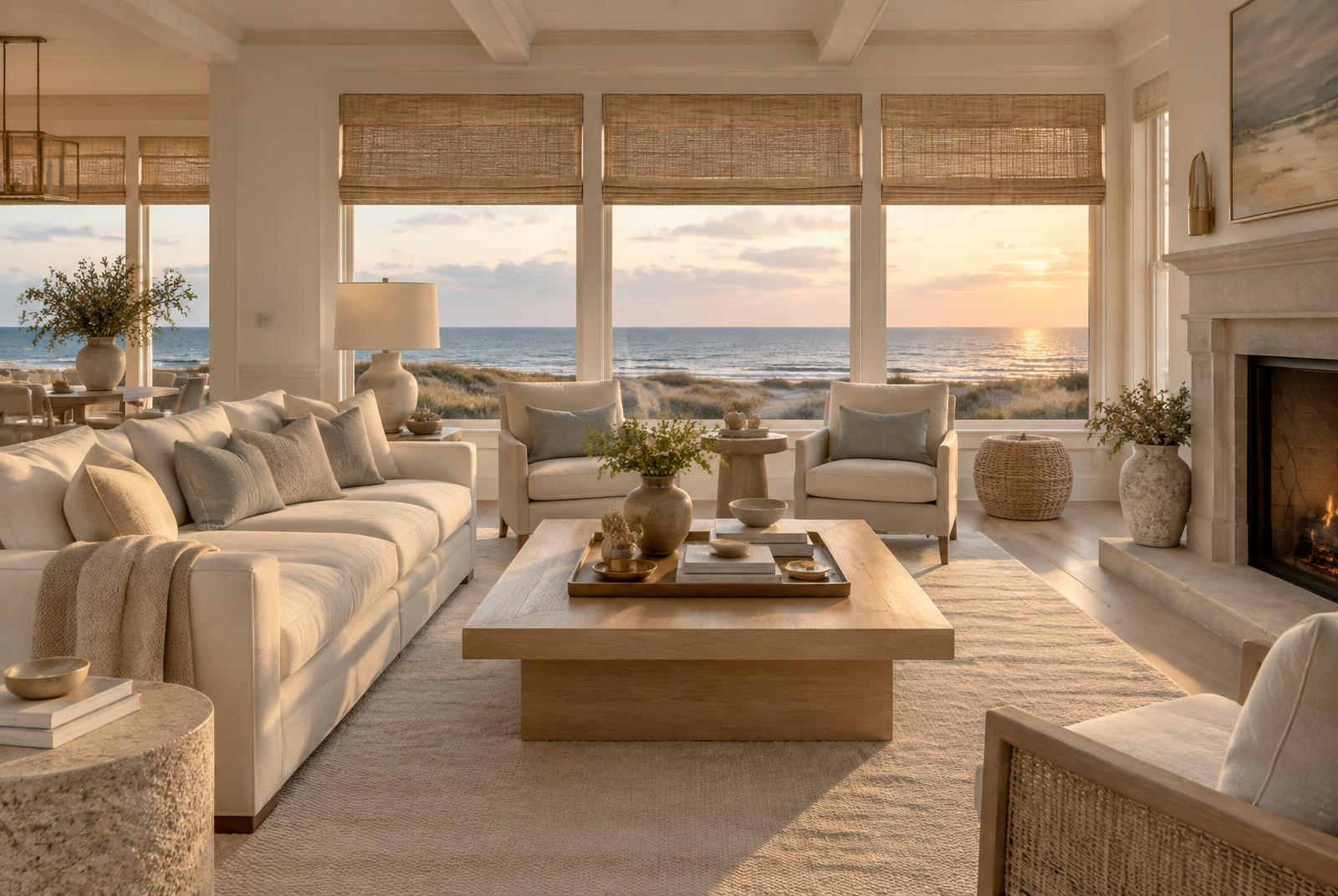
Large coastal glass can deliver a prized view and difficult glare at the same hour. Solar shades filter the strongest periods while retaining a connection outside. Solar film can provide always-active exposure control without covering the opening; an operable shade adds adjustable privacy and darkness.
02
Design for occupied and unoccupied days
A second home may need simple guest controls, scheduled shade positions, and remote awareness without becoming dependent on an app. Grouped motorization can close broad elevations consistently. Rechargeable systems require a realistic charging plan; hardwired power is best coordinated during construction.
03
Give bedrooms a different answer
Open-weave solar fabric is not nighttime privacy. Bedrooms benefit from opaque or blackout fabric, with overlap or channels where stronger darkness matters. Baths may use top-down shades, shutters, or decorative film depending on view, moisture, and desired adjustability.
04
Choose materials for the actual room
Coastal living does not make every material inappropriate, but humidity, direct splash, strong exposure, rental turnover, and cleaning habits should guide selection. Judge samples in the room and confirm care requirements.
Decision table
Compare the practical tradeoffs.
| Area | Useful starting point | Watch for |
|---|---|---|
| View-facing living room | Solar roller shade or film + shade | Night privacy still needs opacity |
| Bedroom | Opaque or blackout shade | Edge light and guest controls |
| Bath | Composite shutter, suitable shade, or frost film | Moisture and permanent versus adjustable privacy |
| Sliding door | Vertical, panel, or wide roller solution | Stack, traffic, and handle clearance |
Specify the hardest hour in each room—afternoon glare, evening privacy, or early sleep—then protect the view the rest of the day.