01
What happens to the view
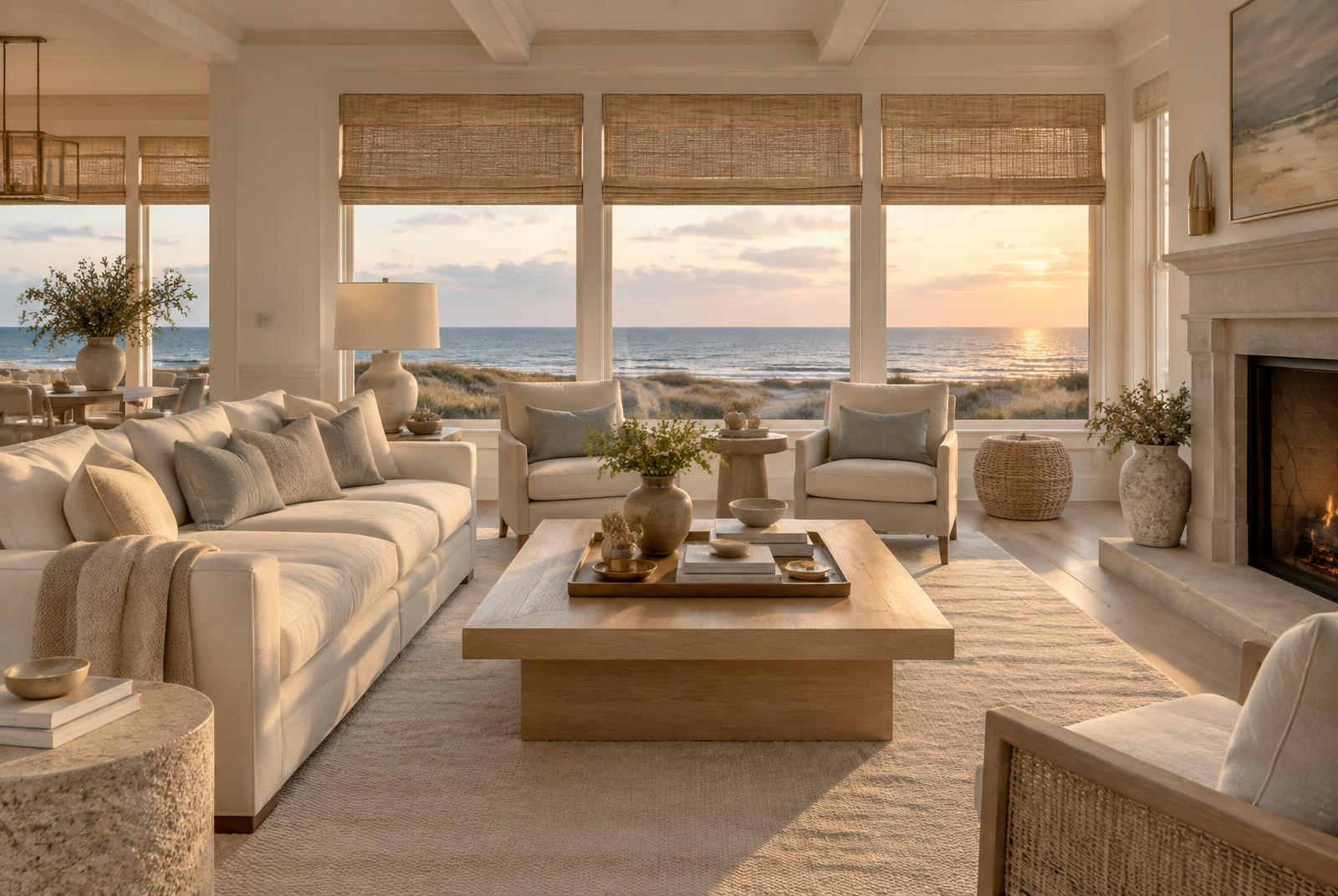
Shutter frames and panels remain in the opening even when louvers are open. That structure can feel beautifully intentional on punched windows but may compete with a broad water view. A roller shade retracts to a compact head detail, leaving more glass visually open when raised.
02
Privacy and darkness
Shutter louvers provide flexible sightline control and substantial privacy when closed, though they are not blackout. Roller fabrics range from view-preserving solar weaves to opaque and blackout materials. For bedrooms, edge gaps and mounting detail matter as much as fabric.
03
Doors, width, and daily use
Sliding doors and very wide openings often favor products that move with the glass or rise clear of it. Motorized roller shades can coordinate broad elevations and second-home routines. Shutter panel swing needs clear floor and furniture space.
04
Material and coastal living
Choose materials for the room’s actual humidity, contact, and cleaning needs rather than assuming every coastal room requires one construction. Natural wood, engineered shutter materials, and shade textiles each have care limits. Samples should be judged beside trim and in strong daylight.
Decision table
Compare the practical tradeoffs.
| Priority | Plantation shutters | Roller shades |
|---|---|---|
| Open view | Frame remains visible | Retracts to compact roll |
| Privacy | Adjustable louvers | Depends on fabric when lowered |
| Wide glass | Panel planning can be substantial | Often well suited, subject to size |
| Darkness | Room-darkening, not blackout | Blackout fabric plus edge planning |
| Motorization | Generally not the core strength | Natural fit for grouped automation |
Let architectural windows carry shutters and view-driven expanses carry shades when that division serves the home.