01
Preserve the view intentionally
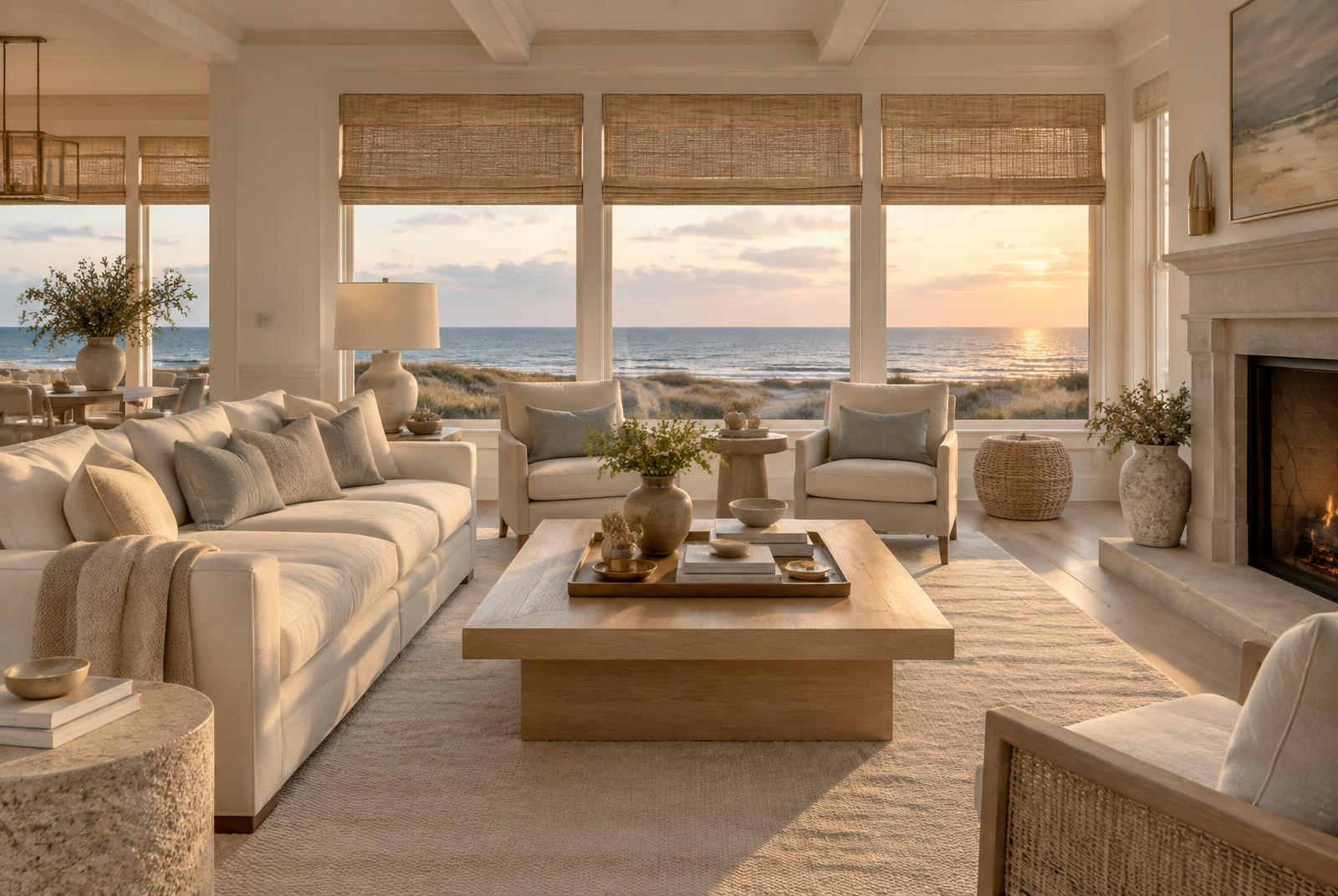
A solar shade’s openness and color determine how much view remains when lowered. Film leaves the opening physically clear and can address persistent exposure. Neither reflective film nor an open solar weave is dependable nighttime privacy when the interior is brighter.
02
Give every room its own function
Living rooms may prioritize view and glare. Bedrooms need darkness and evening privacy. Baths require moisture-conscious materials and sightline control. Sliding doors need a stack that respects traffic. Coordinate color and hardware while allowing products to differ.
03
Plan for changing occupancy
Second homes move between empty, family, and guest use. Straightforward wall controls, labeled remotes, grouped scenes, and scheduled positions can improve consistency. Avoid systems guests cannot operate without an account or app.
04
Avoid vague coastal claims
Choose materials from actual humidity, splash, sun, and cleaning conditions. Coastal location alone does not prove a product is corrosion-proof, fade-proof, or maintenance-free. Confirm care and suitability for the exact specification.
Decision table
Compare the practical tradeoffs.
| Coastal priority | Starting point | Add when needed |
|---|---|---|
| Open view + glare | Solar shade or compatible film | Opaque evening layer |
| Bedroom darkness | Blackout shade | Overlap, channels, or drapery |
| Moisture-conscious room | Composite shutter or faux wood blind | Permanent frost film for privacy |
| Large/high glass | Motorized roller shade | Hardwired power when building |
Coordinate the palette across the house, but let each room’s hardest condition choose the product.